JolyBook Major Music Books

The Lydian Chromatic Concept of Tonal Organization: Tonal Gravity as Practice

Read Russell as a practical ear-training system for tonal gravity, not only as a Lydian scale shortcut.

Published Jun 13, 2026, 9:00 AM

Read Russell as a practical ear-training system for tonal gravity, not only as a Lydian scale shortcut.

The Lydian Chromatic Concept of Tonal Organization belongs in a major music bookshelf because it changes how a practicing musician names problems. This JolyBook note reads the book as a working source: what it asks the ear to notice, what it gives the hand to practice, and where the idea needs careful interpretation.
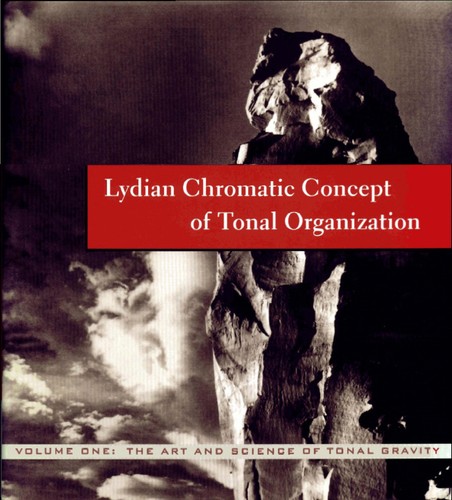
Book cover of The Lydian Chromatic Concept of Tonal Organization
Jazz harmony and tonal organization - Choose one tonic, build the Lydian field by fifths, then test each added chromatic tone by how clearly the center survives.
Book Map
The Lydian Chromatic Concept of Tonal Organization
ReaderJolyBook
Russell moves the major-center question away from default Ionian habits and toward a hierarchy of pitch relationship around a Lydian tonic.
AuthorGeorge Russell
Publication frame1953
FieldJazz harmony and tonal organization
Practice useChoose one tonic, build the Lydian field by fifths, then test each added chromatic tone by how clearly the center survives.

Why this book matters

The book is important because it changes the default question. Instead of asking which diatonic scale belongs to a chord name, Russell asks how pitches organize themselves around a tonal center. That sounds abstract until you sit at an instrument: a C major sonority with F natural behaves differently from a C major sonority with F sharp. One pitch often asks for functional explanation, while the other can become part of a stable bright field.

The deepest practical lesson is not the word Lydian. It is the habit of ranking musical material by gravity. A player can use the concept to decide whether a note strengthens the center, opens the color, or pushes the line outside. That is a more durable skill than memorizing a chord-scale rule because it applies to voicing, melody, bass motion, orchestration, and improvisation.

Russell also gives a way to think vertically without killing motion. A Lydian field can sound complete in the present moment, but a phrase can still move horizontally through tension, sequence, chromatic approach, and cadence. The musician has to decide whether the passage needs a center-facing sonority, a directional line, or a controlled conflict between both.

Reading Method
How to read this without staying theoretical
ReaderMethod
The book becomes useful when every concept is converted into a listening decision, a written sketch, and a repeatable practice test.
Start with one centerDo not begin by collecting every scale name. Use C as a laboratory and make the center physically audible through bass, pedal, register, or repeated arrival.
Compare Ionian and Lydian by earPlay Cmaj7 with F natural, then Cmaj9#11 with F sharp. Write down which tone feels active, which feels stable, and what the bass must do to keep C clear.
Separate vertical and horizontal behaviorA vertical field asks whether the sonority is complete now. A horizontal phrase asks where the line is going next.
Audit every outside noteWhen a chromatic tone appears, name its distance from the center and its job: color, approach, escape, dominant pressure, or temporary tonicization.

How to practice the idea

Choose one tonic, build the Lydian field by fifths, then test each added chromatic tone by how clearly the center survives.

  1. Hold C in the bass for two minutes and play only C, G, D, A, E, B, and F sharp above it as a fifth-stack meditation.
  2. Reorder those tones into C Lydian and write four two-bar melodies that land on different degrees: 1, 3, sharp 4, and 7.
  3. Voice Cmaj7, Cmaj9, Cmaj9#11, and C6/9#11. Record the loop and mark which voicing keeps the center strongest.
  4. Introduce F natural once. Resolve it to E, raise it to F sharp, then leave it unresolved. Compare the three versions.
  5. Improvise one chorus where every phrase answers this question: did the last note reinforce the center or move away from it?

Analysis frame

FocusWhat to hearPractice decision
Major tonic colorDefault habit says avoid or resolve the fourth.Lydian gravity asks whether sharp 4 can belong to the center.
Chord-scale practiceDefault habit maps a scale to a symbol.Gravity practice ranks each tone by relationship to the tonic.
Outside playingDefault habit treats chromatic notes as effects.Gravity practice asks how far the note travels and how it returns.
CompositionDefault habit starts from progression.Lydian practice can start from center, field, and controlled expansion.

Core takeaways

Reading focusPractical takeaway
CenterA pitch can behave as a tonal home without needing a classical cadence.
FieldThe Lydian collection works as a stable major-color parent when the tonic is audible.
GravityChromatic color is strongest when its distance from the center is intentional.
ImprovisationLines should reveal the center, not merely decorate a chord symbol.

Interactive examples

JolyBook Reading State
The Lydian Chromatic Concept of Tonal Organization - Jazz harmony and tonal organization
book: The Lydian Chromatic Concept of Tonal Organizationfocus: Centerpractice: Choose one tonic, build the Lydian field by fifths, then test each added chromatic tone by how clearly the center survives.
JolyMusic
The Lydian Chromatic Concept of Tonal Organization
Reading path/en/blogs/jolybook-major-music-books/lydian-chromatic-concept-tonal-gravity-as-practice
Languageen
AuthorGeorge Russell
Publication frame1953
FieldJazz harmony and tonal organization
Practice Tool
Open a related practice tool
Open tool
StudentComposerPracticeTool
Move from reading to a playable sketch, recorded phrase, or mapped harmonic idea.
Link/en/tools/midi-tool
Workflowread, sketch, listen, revise
JolyBook practice cycle
3 ring(s)
JolyBook ii-V-I practice grid
Root: C • Four-bar practice cycle
Score jolybook-reading-cell.musicxml
Listening Focus
Concept to sound
ReaderAnalysis
A reading idea is treated as musical knowledge only after it changes what the player hears, writes, or performs.
SourceThe Lydian Chromatic Concept of Tonal Organization
QuestionWhat does the ear learn?
DecisionA pitch can behave as a tonal home without needing a classical cadence.
Practice Exercise
One-page practice transfer
StudentExercise
Choose one tonic, build the Lydian field by fifths, then test each added chromatic tone by how clearly the center survives.
Duration20 minutes
Outputone recorded sketch
Ruleone concept only
Source Trail
JolyBook source trail
ResearchSource
Keep the book, the musical example, and the practice result connected.
BookThe Lydian Chromatic Concept of Tonal Organization
FieldJazz harmony and tonal organization
Practice Lens
Turn reading into one musical test
StudentPractice
Choose one tonic, build the Lydian field by fifths, then test each added chromatic tone by how clearly the center survives.
MaterialOne short phrase or cycle
MethodIsolate the book's central idea
CheckThe ear can explain the change
ResultA playable example, not only a summary

Reading caution

The weak reading is "play Lydian over every major chord." The stronger reading is to hear center, field, distance, and return.

Resource Link
Reference point for further reading
ResearchSources
George Russell official Lydian Chromatic Concept page
BookThe Lydian Chromatic Concept of Tonal Organization
ReferenceGeorge Russell official Lydian Chromatic Concept page
Recent posts
Listening journal
Events: 0

Records chord/scale plays and global output tone groups (tones + intervals only).

Advanced audio
Generate and preview band-style accompaniment for chord-grid playback.
RX

Use advanced audio settings as the playback source for chord-grid clicks, test chord charts, and inspect the generated accompaniment.

Harmony chords stay unchanged.
Uses JolyEngine sounds; harmony and bass stay unchanged.
Shift the preset runner shape by this amount after each full preset pass. Example: 1 runs the preset, then the same preset shifted by one step, then again by one more.
Multi-track engines
Route each generated JolyEngine track with the shared engine form while autoplay is active.
0
Output
Master
1
Bass
2
Comping
3
Melody
4
Solo
5
Drums
Available styles
Graphical Options

Configure navigation behavior for Graphical Harmony network view.